

Language selection
Language selection
Currency selection

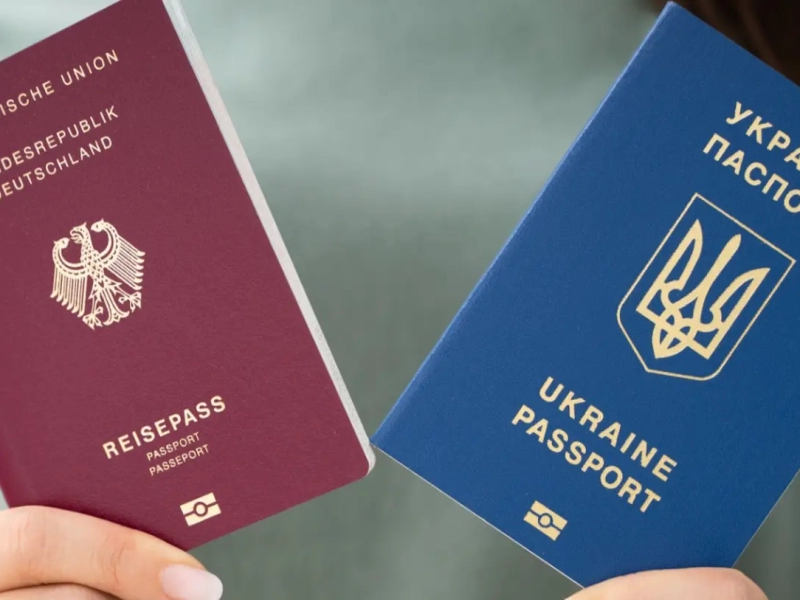

The legal basis for Ukrainians to stay in Germany is based on §24 of the Aufenthaltsgesetz, a German provision that implements the EU decision on temporary protection for people who left Ukraine due to the war. This mechanism is not an individual asylum procedure and does not require lengthy proof of personal persecution. Its task is to quickly give people legal status, the opportunity to live in safety and enjoy basic rights in the country of residence.
That is why temporary protection in Germany should not be called “refugee status” in the classical legal sense. This is a separate basis for legal residence, which arose as a collective response of the EU to the war. For Ukrainians, the practical significance of this mechanism is very great: §24 opens up the opportunity to obtain a residence permit, legally live in the country, work, apply for social support, use a certain amount of medical services and arrange children for educational institutions.
It is also important to understand that temporary protection does not equal short-term visa-free entry. Visa-free entry allows for a short period of stay, and §24 is a separate residence regime after registration. This is why it is important for people who come to Germany because of the war not to dwell on the thought "I can be here for 90 days", but to proceed with the registration of legal status in time if they plan to stay longer or receive assistance.
If you need separate instructions specifically about short-term entry and a package of documents for the road, see the material Rules for entering Germany for Ukrainians: list of documents and requirements . In the same article, the main topic is temporary protection, its limits and practical application.
The basic category is Ukrainian citizens who lived in Ukraine and left because of the war. For them, §24 remains the main and most common legal mechanism for legal residence in Germany. This applies to both those who arrived immediately after the start of the full-scale invasion and those who ended up in Germany later, but still fall under the rules of temporary protection.
Separately, certain family members of Ukrainian citizens may be entitled to protection. Official German explanations speak primarily of the husband or wife, registered partner, minor unmarried children, as well as certain other close relatives who already lived in the same household as of 24.02.2022 and were completely or mainly dependent on the person entitled to protection. It is this dependence and cohabitation that are important conditions, so not every relative automatically falls under §24.
The most cautious approach should be taken in situations involving third-country nationals and stateless persons who lived in Ukraine before the war. The rules for this group have changed, and after June 2024 they are no longer described as broadly as at the beginning of the program. That is why students, workers, and other non-Ukrainian citizens should not rely on the old articles from 2022-2023. For them, there is only one safe approach: to check their grounds individually through official German sources.
In practice, this means a simple thing: if you are a citizen of Ukraine, §24 remains the main and most stable basis for protection. If your situation is more complicated, for example, it concerns a mixed family, a dependent relative, another citizenship, or a non-standard package of documents, it is better not to interpret the norm yourself, but to immediately seek official clarification.
At the EU level, temporary protection for people who have left Ukraine has been extended until March 4, 2027. For Germany, this means that residence permits under §24 that were still valid as of February 1, 2026, are automatically extended until March 4, 2027. This is an important practical rule that removes some of the bureaucratic burden and gives people more stability.
But there is an important nuance here: it is not just any certificate or document in the literal sense that is automatically extended, but the current right of residence under the relevant permit. Therefore, in individual cities or life situations, it may still be necessary to renew the physical Aufenthaltstitel card, obtain technical confirmation, or perform actions that the Ausländerbehörde will notify you of. That is why the formula “nothing needs to be done until 2027” cannot be considered safe advice for everyone.
It is important for a person to regularly check notifications from their local migration service, monitor the validity period of the physical document and not ignore letters from authorities. In everyday situations – for a bank, employer, insurance fund, Jobcenter or school – it may be important not only that your status has been extended in accordance with the regulations, but also that you have a clear and up-to-date document in your hands.
It should also be remembered that long trips from Germany should not be ignored. Short trips to Ukraine or within the EU are possible, but if a person is absent for a long time or plans to live permanently elsewhere, this can affect not only social benefits, but also the residence status itself. Therefore, for any long trip, it is safer to clarify the consequences in advance at the Jobcenter and the Ausländerbehörde.
In June 2025, the EU Council agreed to extend temporary protection for people who left Ukraine until 4 March 2027. Germany then confirmed at the national level the automatic extension of the relevant §24 permits valid on 1 February 2026 until the same date. This means that for most Ukrainians the legal basis for residence in 2026 remains stable.
However, it is worth considering two points at the same time. First, this rule does not mean that all related rights in every situation work “by themselves” without any checks. Second, for some people without Ukrainian citizenship who were in Ukraine before the war, there are certain exceptions. Therefore, even after the positive news about the extension of protection until 2027, it is useful to check whether it applies to your category without additional restrictions.
Another important change in recent years is that German authorities are increasingly separating temporary protection and long-term grounds for residence. This means that §24 should no longer be perceived as something completely “outside the system”. On the contrary, it is increasingly integrated into the normal migration logic: work, education, access to the labor market, transition to other grounds, interaction with the Jobcenter and insurance funds. For Ukrainians, this is important, because the status is becoming not only “anti-crisis”, but also an intermediate stage for those who are thinking about staying in Germany for a longer period.

The procedure for obtaining temporary protection in Germany consists of several sequential steps. It is simpler than the classic asylum procedure, but still requires attention to detail. A person needs to not just arrive, but move from the fact of entry to the registration of legal status.
Ukrainian citizens with a biometric passport are entitled to a short-term visa-free stay of up to 90 days within the entire Schengen area. This allows them to enter Germany without a visa, but does not in itself replace the registration of §24 if a person plans to stay longer or apply for state assistance. A key practical point: at the latest from the moment a person applies for state support in Germany - housing, care, social benefits - they need to be registered.
If a person needs state support, they are referred to a reception center or other designated structure in a federal state or district. It is during such registration that basic data is collected, documents are checked, and the further administrative process is launched. The organization may differ in different cities, but the general logic is the same: without initial registration, it is impossible to fully enter the social support system.
After settling in, it is important to have an officially registered place of residence. Address registration is not just a formality. It affects where you will be served, where letters from the authorities will be sent, which Jobcenter or Ausländerbehörde will be competent in your case, and how other services will be processed in the future.
After that, the person applies to the Foreigners' Office - Ausländerbehörde - to apply for a residence permit under §24. This is where the documents are checked, biometric data and photos are collected and the registration of the permit is initiated. The registration procedure, submission format and list of technical steps depend on the city. In large cities, the procedure may be more digital, in smaller ones - more often tied to a personal visit.
After submitting an application, a person does not always receive a plastic card immediately. In practice, a very important intermediate document is the Fiktionsbescheinigung - temporary confirmation of legal residence. It is needed not only for formal peace. It is this document that often allows you to confirm your status before the Jobcenter, employer, social security fund and other institutions. If it states the right to work, a person can legally find work even before receiving a plastic card.
Later, a plastic Aufenthaltstitel is issued - a full-fledged residence permit. It is the most convenient way to open a bank account, enter into contracts, rent housing, confirm status with an employer, and use most services without additional explanations.
To apply for temporary protection in Germany, the most important document is a passport or other identity document. It is advisable to have a valid international passport, but in a military context, authorities often consider alternative documents if a person does not have a complete package of documents. In any case, the rule is simple: the more proof of your identity you can provide, the easier the procedure will be.
For children, birth certificates or other documents of the child are required. For family filing, it is useful to immediately have documents confirming family ties: marriage certificates, change of surname, documents of guardianship, if any. Such papers are not always critical at the time of first contact, but are often needed later - for social benefits, school, kindergarten, reunification or clarification of family composition.
It is especially important to have proof of address or a document from the accommodation center. Biometric photos are also useful in practice, although in many cases they are taken during registration. If you have diplomas, driver's licenses, medical certificates, child vaccination certificates, documents about education or qualifications, you should also keep them in a separate folder. They are not always needed for §24 itself, but they are very helpful for further integration.
The key practical principle here is: do not delay your application just because your documents are not perfect. If you were forced to leave due to war, the German system allows you to work with an incomplete set of documents, and some of the data or evidence can be submitted later.
The issue of benefits in Germany is very sensitive, so it is important to be as precise as possible. People with §24 can receive social benefits if they need help and do not have enough income or assets to cover living expenses. If a person is able to work, the main mechanism is Bürgergeld through the Jobcenter. If the ability to work is limited or the person belongs to another category, other forms of assistance may apply, including Sozialhilfe.
Equally important, the amount of support depends on the specific situation: family composition, age of children, income level, housing, entitlement to other benefits. That is why it is safer not to present “universal” fixed amounts in the article without reference to year and category. The size of standard benefits in Germany changes regularly, and different rates apply to different groups – single adults, partners, young adults, children of different ages.
In addition to basic living allowances, other forms of support may be available under certain conditions: payment or co-financing of housing, child benefits, family allowances, specific educational and integration programs. But they should not be described as automatic for everyone. The German social support system is individual: what is available to one family is not necessarily credited in the same form to another.
That is why the practical advice after receiving the status is the same: contact the Jobcenter or another competent authority in your city as soon as possible and clarify not only the fact of your right to assistance, but also the full list of benefits available to you. This is especially important for families with children, people with disabilities, pensioners, and those who are already working part-time.
Having received §24, Ukrainians in Germany acquire not only the right to stay, but also access to a number of practical opportunities. But it is important not to exaggerate and not write that people “receive the same conditions as German citizens.” The real logic is different: temporary protection gives the right to legal life in the country and access to a significant part of the system, but the specific scope of rights depends on the type of document, source of income, participation in the social system and stage of stay.
This is one of the main practical advantages of §24. If your document – Fiktionsbescheinigung or Aufenthaltstitel – contains the word “Erwerbstätigkeit erlaubt” (Employment permitted) , you are entitled to work in Germany. This applies to employment and, in many cases, self-employment. Access to work is often the main tool for integration: it provides not only income, but also language practice, experience, new contacts and less dependence on benefits.
Children have the right to attend school, and parents can contact local education authorities to enroll in an educational institution. Kindergartens are available for preschoolers, although the problem of availability of places remains relevant in some cities. For young people and students, the opportunities are wider, but depend on the level of education, language training and the rules of a particular educational institution.
The section on medicine should be interpreted with great caution. People with §24 do not always automatically fall into the same healthcare model as someone with a normal long-term job in Germany. If a person receives benefits under the Asylbewerberleistungsgesetz, in the first 18 months the right to treatment is limited to necessary medical and dental care for acute illnesses or pain, as well as pregnancy, childbirth, vaccinations and certain preventive services. After transferring to another payment system or if there is work, the mechanism for accessing medicine may change.
With a certificate or Fiktionsbescheinigung and address registration, it is much easier to open a bank account, arrange a mobile connection, conclude rental agreements, interact with schools, employers and insurance funds. That is why, after obtaining the status, it is important not to delay with the "domestic" steps - they directly affect everyday life.
After applying for §24, the most important thing is not to lose momentum in the first weeks. It is during this period that people often postpone key actions, and then encounter difficulties: it is impossible to receive a payment without an invoice, it is difficult to find a job without a document, it is difficult to enroll a child in school without an address, and without contact with the Jobcenter, the family is left without clear financial support.
A bank account is needed to receive wages, social security payments, rent and regular daily payments. In most cases, the bank will ask for a residence document or Fiktionsbescheinigung, a passport and proof of address.
Once it becomes clear through which mechanism you receive support or on what basis you work, you need to find out your real status in the health insurance system. You should not assume that everything will be “taken care of automatically”. It is better to immediately clarify which insurance company serves you, whether insurance is taken out, what documents are required and what services are currently available.
For those in need of social support, the Jobcenter remains a key institution. It is here that issues of basic benefits for able-bodied persons, integration into the labor market, language courses, vocational programs and part of the costs related to housing are resolved. Even those who plan to find a job quickly should not ignore the Jobcenter: it is there that you can get important explanations about the transition from benefits to income from work.
For families with children, one of the first practical steps is to contact local education authorities. It is best to start enrolling in a school or kindergarten immediately after stabilizing the issue of the residential address. In large cities, the demand for places is high, so delay often creates unnecessary difficulties.
Despite the extension of §24 until 2027, many Ukrainians are already thinking not only about protection, but also about a more stable long-term basis for residence. This is logical: people work, study, integrate, rent housing, and make professional plans. That is why temporary protection is increasingly perceived not as an end point, but as an intermediate stage.
The most common areas of transition are skilled work, Blue Card, training, vocational education, family reunification and other grounds that provide a longer horizon of legal stay. But here it is important not to simplify the topic to the formula "contract + language = new status". Each type of permit has separate requirements: for qualifications, recognition of diplomas, income, specialty, type of employer, educational institution or family connection.
In practice, this means that after receiving §24, a person can gradually prepare for the transition: confirm their education, learn the language, gain work experience in Germany, look for a long-term contract, enroll in an educational institution, or consult about family reunification. However, it is better to make a decision about a specific route not according to a template, but after checking your specific situation.
Therefore, this block should not be perceived as a “simple instruction to move from §24 to §18”, but as a reminder: temporary protection can be a start for a longer legal stay, but each subsequent basis is drawn up according to its own rules.
For many Ukrainians, the journey to Germany begins with a bus trip. This remains one of the most convenient ways to get to the country without transfers or with understandable logistics, especially for families with children, passengers with luggage, and those traveling not to one specific metropolis, but to different cities in the country.
On the page bus tickets to Germany you can view routes and find your way around. And in order not to reduce the trip to just buying a ticket, it is useful to think over in advance a package of documents, copies of important papers, contacts of the first place of residence, an alternative route in case of a change of plans, and basic things for the road.
For practical preparation, you should also review the materials Required Documents for Traveling Abroad by Bus , How to Prepare for Traveling by Bus to Another Country , Rules for Carrying Luggage on International Buses , and Can Animals Be Carried on a Bus . They will help you prepare not only legally, but also in everyday terms: understand the rules for luggage, hand luggage, transporting documents, and organizing a trip with children or pets.
To make your trip go more smoothly, it's worth checking five simple things: have all your documents at hand, have copies of them on your phone and in the cloud, have your phone and power bank charged, know where you're going after you arrive, and have the contact information for the person or place you're staying. It's this preparation that usually reduces the most stress in the first few days after moving.
This is a special basis for legal stay based on the EU's temporary protection mechanism. It is not a classic refugee status and is applied separately from the regular asylum procedure.
As of April 22, 2026, certificates under §24 that were valid on February 1, 2026, were automatically extended until March 4, 2027.
No, not in every case. But the automatic extension of the right of residence itself does not mean that you can completely ignore the instructions of the Ausländerbehörde. In some cases, you need to update the physical card or perform technical actions.
Yes, if the document states that employment is permitted. That is why this document often has practical significance even before receiving a plastic permit.
No, that's not the right way to phrase it. Access to medicine depends on the mechanism by which a person receives support and what system they are in. In the first months, the scope of assistance may be limited to certain categories of treatment.
Short trips are possible, but a long absence may affect benefits or raise questions about your status. Before a long trip, it is best to clarify the consequences at the Jobcenter and the Ausländerbehörde.
Yes, in many cases it is possible. But the rules for transition depend on the specific reason: work, study, Blue Card, family reunification or another type of permit. There is no universal scheme for everyone.
Temporary protection in Germany remains one of the most important support mechanisms for Ukrainians who left because of the war. It provides not only a formal right of residence, but also a real practical basis for life: the opportunity to obtain a residence permit, work, apply for social assistance, and resolve issues of children, housing, and integration.
At the same time, the main rule for safe use of §24 is very simple: do not rely on old or too general advice. What was relevant in 2022 may not always work correctly in 2026. That is why you need to monitor the messages of the Ausländerbehörde, Jobcenter, social security fund and the official Germany4Ukraine portal, update your documents in a timely manner and do not ignore even technical messages.
If your story is just beginning with the road to Germany, proper preparation for the trip itself is no less important than registering your status upon arrival. A well-thought-out route, collected documents, a clear plan of first actions, and smooth logistics often mean not just a more comfortable trip, but a much more confident start to a new stage of life.

| Ticket booking | +38 (098) 343-82-82 |
| Support | +38 (050) 082-82-82 |
