

Language selection
Language selection
Currency selection

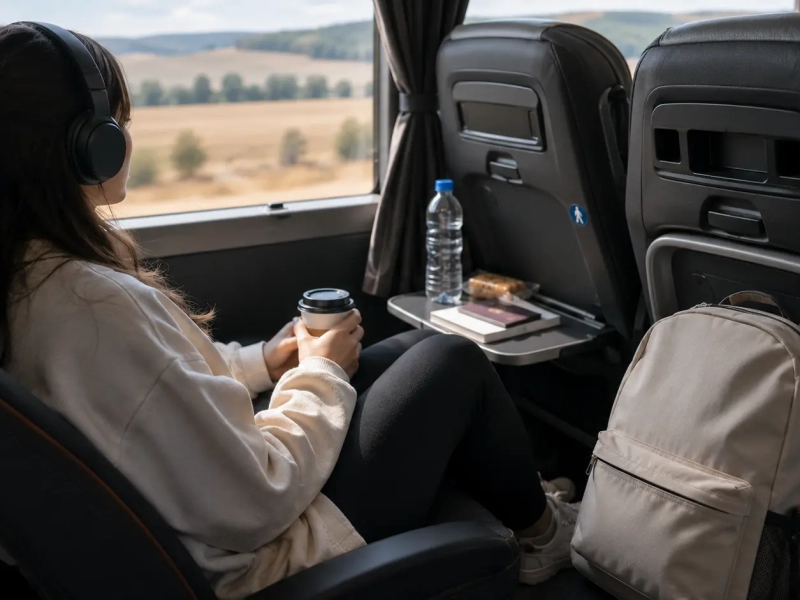

The list of documents depends on the route, the passenger's citizenship, the destination country, the purpose of the trip and the composition of the travelers. To travel through Ukraine, you must have a valid identity document. Before traveling internationally, you must separately check the requirements of the destination country and transit countries.
Depending on the circumstances, the passenger may need:
Requirements may change, so this general list is not a substitute for checking the official rules. Before embarking on an international route, it is worth separately reviewing what documents are required for traveling by bus abroad , and then checking the information on the official resources of the destination country.
Documents, money, tickets, phones, bank cards, and any necessary medications should be kept in your hand luggage. It is not a good idea to put them in a suitcase that is in the luggage compartment: access to it may be restricted during the trip.
Before you leave, it is a good idea to make electronic copies of your essential documents and store them in a secure cloud storage. Copies are not a substitute for the originals and will not, by themselves, replace a lost document, but they can help confirm your information when contacting the police, consulate, or insurance company. Access to the copies should be protected with a strong password and two-factor authentication.
You should download the e-ticket to your phone or take a screenshot of it. This will allow you to show the ticket without access to the mobile Internet. The phone should be charged before departure, and the flight number, time and place of boarding should be checked immediately before the trip.
For payment, it is better to have a bank card and a small amount of cash in the currency of the country of the route. Cashless payment may not be available at some stops, toilets or small retail outlets. You should not keep all your money and cards in one place. You can put some of your money in the inner pocket of a bag that you always carry with you.
It is advisable to label your suitcase with a name tag and contact number, and take a photo before checking it in. A bright ribbon or cover will help you identify it more quickly when checking it out. A combination lock or luggage strap can make it harder to accidentally open your suitcase, but it does not guarantee protection against theft.
The rules of transportation, permissible dimensions and number of items are determined by the carrier. Therefore, before departure, you should check the rules for transporting luggage on international buses . If your luggage is lost or damaged, you should immediately notify the driver or company representative and submit a written application in accordance with the carrier's conditions.
The official Your Europe portal explains the rights of bus passengers in the EU in the event of a cancellation or long delay of a flight. However, general EU rules do not establish a single compensation mechanism for luggage lost or stolen during a regular bus journey. In such a situation, the carrier's conditions and relevant national rules apply.
Hand luggage should contain items that you may need while traveling, at the border, at stops, or in case of delays. It is best to pack it so that the most important items can be quickly accessed without having to unpack the entire backpack.
The basic set for the bus interior should include:
Do not overload your hand luggage. It must comply with the carrier's rules, fit in the designated space, and not block the aisle or emergency exit.

The possibilities for maintaining personal hygiene on the road depend on the length of the route, the schedule of stops and the equipment of the bus. Even if there is a toilet in the cabin, the passenger should have his own compact set of hygiene products.
The following will be useful for the trip:
It is better not to use products with a strong odor in the cabin, as they may cause discomfort or allergic reactions in other passengers.
The composition of the first aid kit should be selected taking into account the state of health, the duration of the route and the country of destination. There is no universal list of medicines. You should not take unfamiliar drugs or use them without taking into account contraindications and interactions with other drugs.
A road first aid kit may include:
It is advisable to transport medicines in their original packaging with legible names. The rules for importing individual medicines vary depending on the country, so before traveling internationally, you should check them in official sources. A more detailed list and warnings is provided in the material on what to put in a travel first aid kit .
Travel comfort largely depends on your clothing. The cabin can be cool due to air conditioning or warm due to heating and a large number of passengers. A practical solution is to wear several light layers of clothing that you can remove or put on depending on the temperature.
Clothing should not be tight around the waist, legs, or neck. For a long route, it is better to choose clothes that do not restrict movement and comfortable closed shoes. The fabric can be natural, synthetic, or mixed - it is more important that it wicks moisture well, does not rub, and is suitable for the weather.
For relaxation on the bus, you can take:
Passengers should not leave their phones, wallets, or documents unattended on their seats during stops. Before getting off the bus, it is also a good idea to check the length of your stay and remember where you parked.
A smartphone, power bank, charging cable and headphones will help you stay connected and organize your leisure time. It is better to download books, podcasts, music, films and maps in advance. Even if the bus description mentions Wi-Fi and sockets, their availability or stability of operation should not be the only source of communication and charging.
Bus operators may make sanitary stops, but their time and location depend on the route, the situation at the border, and road conditions. You should not expect that a store or food outlet will be open at every stop.
Foods that are convenient to eat, easy to pack, and safe to store for the planned time are suitable for the road. These can include:
You should avoid foods with strong odors, foods that spoil quickly without refrigeration, and dishes with a lot of sauce. For international travel, you should also consider customs restrictions on importing food into the destination country.
It is best to take water in a hermetically sealed bottle. A reusable bottle can only be filled where the water is officially suitable for drinking. A regular household filter in a bottle does not guarantee the removal of all possible microorganisms or chemical contaminants.
Carbonated or sugary drinks do not necessarily cause dehydration, but they can increase thirst, bloating, or discomfort during travel. It is better to choose plain drinking water as your main drink, and determine its amount based on the length of the route, temperature, and personal needs.

The number of things you need to pack depends not only on the length of your trip, but also on the weather, your itinerary, the ability to wash your clothes, the type of accommodation you have, and your personal needs. Don't pack too many things just because your trip will last a few days.
A small backpack is usually enough for a one-day trip. It should contain documents, a ticket, a phone, a charging cable or power bank, a bank card, a small amount of cash, water, a snack, tissues, and necessary medications.
If the program involves long walks, it is worth adding comfortable shoes, a hat, sunglasses, SPF, and clothing according to the weather forecast.
For a two-day trip, you will need a change of underwear, socks, basic hygiene products, chargers, and a compact first aid kit. A full set of spare clothes is not always necessary - its appropriateness depends on the weather and planned activities.
If you are staying overnight, you should check what items the hotel or other accommodation provides. This will help you avoid bringing towels, hair dryers, cosmetics, or other items you don't need.
For longer trips, it is worth organizing your clothing sets by day or activity. Additional shoes are needed if you plan to walk in different weather conditions, attend formal events, or do active recreation.
You can add a travel cosmetic bag, a supply of necessary medications for the entire period with a small reserve, a bag for used clothes, and a compact umbrella or raincoat to your suitcase. It is better to choose a book, tablet, and other entertainment items based on the weight of your luggage and your real needs.
Sitting for long periods of time can cause fatigue, swelling, and discomfort in your back or legs. According to the U.S. Centers for Disease Control and Prevention , trips longer than four hours by bus, car, train, or plane may increase the risk of blood clots in people with certain risk factors.
During a long route it is worth:
People with an increased risk of thrombosis, cardiovascular disease, recent surgery, pregnancy, or other conditions that may affect the safety of a long trip should consult a doctor in advance. You should not start taking medications or use medical compression products without proper advice.
Preparing for a bus trip doesn't start with packing your suitcase, but with checking the route. You need to clarify the boarding location and time, baggage rules, approximate travel time, whether there are any transfers, and the carrier's contact information.
Before leaving home, use this checklist:
During the trip, you should follow the driver's announcements, do not be late after stops, and do not leave valuables unattended. If the route crosses the border, documents should be kept in an accessible place, not in the luggage compartment.
The comfort of a bus trip depends on the preparation, duration of the route and personal needs of the passenger. Documents, ticket, money, phone and necessary medicines should be left in hand luggage. Water, snacks, clothing and hygiene products should be selected taking into account the duration of the journey, weather and possible stops.
Before traveling internationally, be sure to check the rules of entry, luggage, food, and medicine from official sources. Save your ticket, itinerary, and important contacts offline in advance. This will help you avoid many problems and feel more relaxed on the road.
When planning your next trip, you can choose the appropriate LikeBus route, check the flight conditions, and prepare your things in advance using this checklist.

| Ticket booking | +38 (098) 343-82-82 |
| Support | +38 (050) 082-82-82 |
