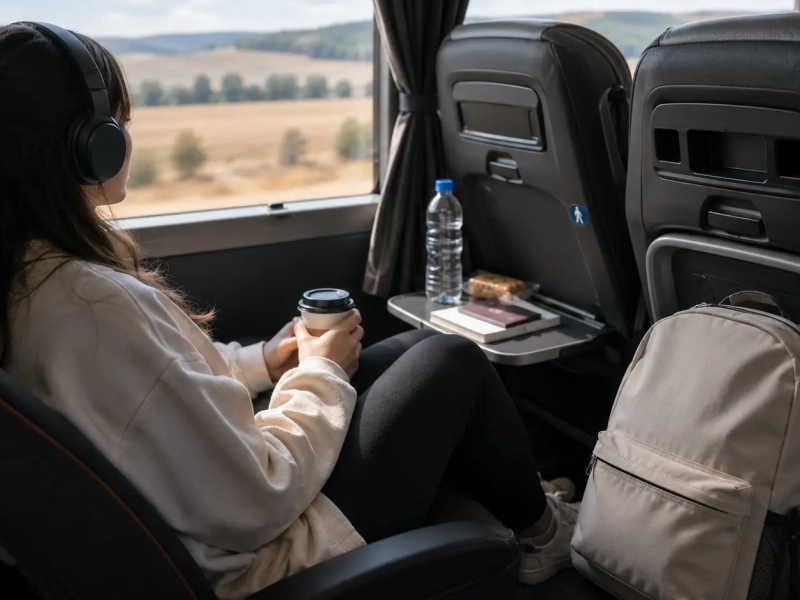

The most important things for travel: creating your perfect checklist

The most important things for travel: creating your perfect checklist
Published September 29, 2026|author: Andrii Vovk|Reading time: 11 min

Contents:

Documents, money and security

Documents, money and security

The list of documents depends on the route, the passenger's citizenship, the destination country, the purpose of the trip and the composition of the travelers. To travel through Ukraine, you must have a valid identity document. Before traveling internationally, you must separately check the requirements of the destination country and transit countries.

Depending on the circumstances, the passenger may need:

  • a valid identity document or a document for traveling abroad;
  • visa, entry permit or document confirming legal grounds for stay, if required;
  • bus ticket and route details;
  • medical insurance policy, if required by entry regulations or travel conditions;
  • confirmation of accommodation reservation, invitation, return ticket or other documents regarding the purpose of the trip;
  • documents for a child, pet or person who needs to be accompanied;
  • a prescription or medical certificate for certain medicines, if this is provided for by the rules for their transportation.

Requirements may change, so this general list is not a substitute for checking the official rules. Before embarking on an international route, it is worth separately reviewing what documents are required for traveling by bus abroad , and then checking the information on the official resources of the destination country.

Documents, money, tickets, phones, bank cards, and any necessary medications should be kept in your hand luggage. It is not a good idea to put them in a suitcase that is in the luggage compartment: access to it may be restricted during the trip.

Before you leave, it is a good idea to make electronic copies of your essential documents and store them in a secure cloud storage. Copies are not a substitute for the originals and will not, by themselves, replace a lost document, but they can help confirm your information when contacting the police, consulate, or insurance company. Access to the copies should be protected with a strong password and two-factor authentication.

You should download the e-ticket to your phone or take a screenshot of it. This will allow you to show the ticket without access to the mobile Internet. The phone should be charged before departure, and the flight number, time and place of boarding should be checked immediately before the trip.

For payment, it is better to have a bank card and a small amount of cash in the currency of the country of the route. Cashless payment may not be available at some stops, toilets or small retail outlets. You should not keep all your money and cards in one place. You can put some of your money in the inner pocket of a bag that you always carry with you.

It is advisable to label your suitcase with a name tag and contact number, and take a photo before checking it in. A bright ribbon or cover will help you identify it more quickly when checking it out. A combination lock or luggage strap can make it harder to accidentally open your suitcase, but it does not guarantee protection against theft.

The rules of transportation, permissible dimensions and number of items are determined by the carrier. Therefore, before departure, you should check the rules for transporting luggage on international buses . If your luggage is lost or damaged, you should immediately notify the driver or company representative and submit a written application in accordance with the carrier's conditions.

The official Your Europe portal explains the rights of bus passengers in the EU in the event of a cancellation or long delay of a flight. However, general EU rules do not establish a single compensation mechanism for luggage lost or stolen during a regular bus journey. In such a situation, the carrier's conditions and relevant national rules apply.

What to put in hand luggage?

Hand luggage should contain items that you may need while traveling, at the border, at stops, or in case of delays. It is best to pack it so that the most important items can be quickly accessed without having to unpack the entire backpack.

The basic set for the bus interior should include:

  • documents, ticket, wallet and phone;
  • power bank, charging cable and mains adapter;
  • water and a snack;
  • medications that need to be taken on schedule;
  • wet and dry wipes, antiseptic and paper tissues;
  • a warm sweater, light blanket or cape;
  • sleep mask, earplugs or headphones;
  • a spare protective mask, if the passenger needs it;
  • a small garbage bag;
  • a pen for filling out documents or notes.

Do not overload your hand luggage. It must comply with the carrier's rules, fit in the designated space, and not block the aisle or emergency exit.

Hygiene and travel first aid kit

Hygiene and travel first aid kit

The possibilities for maintaining personal hygiene on the road depend on the length of the route, the schedule of stops and the equipment of the bus. Even if there is a toilet in the cabin, the passenger should have his own compact set of hygiene products.

The following will be useful for the trip:

  • wet and dry wipes;
  • hand sanitizer;
  • toilet paper or paper tissues;
  • a toothbrush and a small pack of toothpaste for a long trip;
  • deodorant with a neutral smell;
  • menstrual hygiene products as needed;
  • a contact lens case and glasses, if the passenger uses them;
  • personal care products in compact packages.

It is better not to use products with a strong odor in the cabin, as they may cause discomfort or allergic reactions in other passengers.

The composition of the first aid kit should be selected taking into account the state of health, the duration of the route and the country of destination. There is no universal list of medicines. You should not take unfamiliar drugs or use them without taking into account contraindications and interactions with other drugs.

A road first aid kit may include:

  • medicines that the passenger regularly takes as prescribed by a doctor;
  • plasters of various sizes;
  • antiseptic for treating minor injuries;
  • sterile wipes or bandage;
  • remedies that the passenger has already used in case of headache, allergy, nausea or indigestion;
  • prescription, medical certificate or other documents for medications, if they are needed to cross the border.

It is advisable to transport medicines in their original packaging with legible names. The rules for importing individual medicines vary depending on the country, so before traveling internationally, you should check them in official sources. A more detailed list and warnings is provided in the material on what to put in a travel first aid kit .

Comfortable clothes, accessories and gadgets

Travel comfort largely depends on your clothing. The cabin can be cool due to air conditioning or warm due to heating and a large number of passengers. A practical solution is to wear several light layers of clothing that you can remove or put on depending on the temperature.

Clothing should not be tight around the waist, legs, or neck. For a long route, it is better to choose clothes that do not restrict movement and comfortable closed shoes. The fabric can be natural, synthetic, or mixed - it is more important that it wicks moisture well, does not rub, and is suitable for the weather.

For relaxation on the bus, you can take:

  • neck pillow;
  • a light blanket or a large scarf;
  • sleep mask;
  • earplugs or noise-canceling headphones;
  • spare socks;
  • a small bag for valuables.

Passengers should not leave their phones, wallets, or documents unattended on their seats during stops. Before getting off the bus, it is also a good idea to check the length of your stay and remember where you parked.

A smartphone, power bank, charging cable and headphones will help you stay connected and organize your leisure time. It is better to download books, podcasts, music, films and maps in advance. Even if the bus description mentions Wi-Fi and sockets, their availability or stability of operation should not be the only source of communication and charging.

Food and water for the road

Bus operators may make sanitary stops, but their time and location depend on the route, the situation at the border, and road conditions. You should not expect that a store or food outlet will be open at every stop.

Foods that are convenient to eat, easy to pack, and safe to store for the planned time are suitable for the road. These can include:

  • nuts and dried fruits, if there is no allergy;
  • whole fruits that do not require cutting;
  • crackers, bread or dry cookies;
  • bars without glaze, which melts quickly;
  • sandwiches with ingredients that do not spoil during the trip;
  • portioned products in airtight packaging.

You should avoid foods with strong odors, foods that spoil quickly without refrigeration, and dishes with a lot of sauce. For international travel, you should also consider customs restrictions on importing food into the destination country.

It is best to take water in a hermetically sealed bottle. A reusable bottle can only be filled where the water is officially suitable for drinking. A regular household filter in a bottle does not guarantee the removal of all possible microorganisms or chemical contaminants.

Carbonated or sugary drinks do not necessarily cause dehydration, but they can increase thirst, bloating, or discomfort during travel. It is better to choose plain drinking water as your main drink, and determine its amount based on the length of the route, temperature, and personal needs.

What to take on a trip depending on its duration?

What to take on a trip depending on its duration?

The number of things you need to pack depends not only on the length of your trip, but also on the weather, your itinerary, the ability to wash your clothes, the type of accommodation you have, and your personal needs. Don't pack too many things just because your trip will last a few days.

1 day trip

A small backpack is usually enough for a one-day trip. It should contain documents, a ticket, a phone, a charging cable or power bank, a bank card, a small amount of cash, water, a snack, tissues, and necessary medications.

If the program involves long walks, it is worth adding comfortable shoes, a hat, sunglasses, SPF, and clothing according to the weather forecast.

2-day trip

For a two-day trip, you will need a change of underwear, socks, basic hygiene products, chargers, and a compact first aid kit. A full set of spare clothes is not always necessary - its appropriateness depends on the weather and planned activities.

If you are staying overnight, you should check what items the hotel or other accommodation provides. This will help you avoid bringing towels, hair dryers, cosmetics, or other items you don't need.

Trip for 3 days or longer

For longer trips, it is worth organizing your clothing sets by day or activity. Additional shoes are needed if you plan to walk in different weather conditions, attend formal events, or do active recreation.

You can add a travel cosmetic bag, a supply of necessary medications for the entire period with a small reserve, a bag for used clothes, and a compact umbrella or raincoat to your suitcase. It is better to choose a book, tablet, and other entertainment items based on the weight of your luggage and your real needs.

How to reduce discomfort during a long trip?

Sitting for long periods of time can cause fatigue, swelling, and discomfort in your back or legs. According to the U.S. Centers for Disease Control and Prevention , trips longer than four hours by bus, car, train, or plane may increase the risk of blood clots in people with certain risk factors.

During a long route it is worth:

  • periodically change body position;
  • bend and unbend your feet and legs without disturbing other passengers;
  • do not place heavy objects so that they put pressure on your legs or restrict movement;
  • use planned stops for short walks;
  • drink water according to the body's needs;
  • Do not take sleeping pills, sedatives or other medications without a doctor's recommendation.

People with an increased risk of thrombosis, cardiovascular disease, recent surgery, pregnancy, or other conditions that may affect the safety of a long trip should consult a doctor in advance. You should not start taking medications or use medical compression products without proper advice.

Tips for a comfortable trip

Preparing for a bus trip doesn't start with packing your suitcase, but with checking the route. You need to clarify the boarding location and time, baggage rules, approximate travel time, whether there are any transfers, and the carrier's contact information.

Before leaving home, use this checklist:

  1. Check your documents. Make sure they are valid and meet the requirements of the country of destination and transit.
  2. Save your ticket offline. Upload a file or take a screenshot with the flight number, time, and boarding location.
  3. Divide your luggage. Leave your documents, money, phone, charger, and medication in your hand luggage.
  4. Label your suitcase. Add a contact tag and take a photo of your luggage before checking it in.
  5. Check the charge of your gadgets. Charge your phone and power bank, download maps, music or movies.
  6. Pack water and snacks. Choose foods that are safe to store and easy to eat in the cabin.
  7. Check the weather. Prepare clothing for your departure point, stops, and destination.
  8. Save important contacts. Write down the number of the carrier, insurance company, place of residence and a person to contact in an emergency.
  9. Arrive early for boarding. Please check with your carrier for the exact recommended time.

During the trip, you should follow the driver's announcements, do not be late after stops, and do not leave valuables unattended. If the route crosses the border, documents should be kept in an accessible place, not in the luggage compartment.

Conclusion

The comfort of a bus trip depends on the preparation, duration of the route and personal needs of the passenger. Documents, ticket, money, phone and necessary medicines should be left in hand luggage. Water, snacks, clothing and hygiene products should be selected taking into account the duration of the journey, weather and possible stops.

Before traveling internationally, be sure to check the rules of entry, luggage, food, and medicine from official sources. Save your ticket, itinerary, and important contacts offline in advance. This will help you avoid many problems and feel more relaxed on the road.

When planning your next trip, you can choose the appropriate LikeBus route, check the flight conditions, and prepare your things in advance using this checklist.

Author:

Andrii Vovk
Travel expert
Visited 20+ countries, speaks 5 languages, knows where to find the cheapest tickets and how to cross half of Europe with one backpack.

Recommended articles

5 charming European cities you can reach by bus
Travel tips • Reading time: 14 min
5 charming European cities you can reach by bus
Istanbul Istanbul is a city on two continents, with the Bosphorus separating Europe and Asia, and different historical eras have left their mark on its architecture. Here you can spend the day among Byzantine and Ottoman monuments, take a ferry across the strait, and in the evening find yourself in an area with a different rhythm and mood. Istanbul is not part of the European Union, but its European part makes the city a suitable destination for a trip to Europe. The historical districts of Istanbul encompass monuments from different periods. The historical districts of Istanbul are included in the World Heritage List , among which the Hagia Sophia occupies a special place. If you want to start your acquaintance with the city from the most famous buildings, take the time not only to look inside, but also to walk between them: the squares, streets and views of the Bosphorus are also part of the journey here. The LikeBus route list includes, in particular, a bus trip from Odessa to Istanbul. However, do not assume that a non-stop flight is available from any city in Ukraine every day: before buying a ticket, check the current destinations to Turkey , date and boarding conditions. Istanbul Key attractions of Istanbul For your first trip, it's a good idea to combine a few sights in the historic center with a stroll by the water. The following places will help you see different sides of Istanbul, from its imperial heritage to the daily life of a big city: Topkapi Palace. The former residence of the Ottoman sultans, it is a large complex with courtyards, gardens and historical collections. It is best to set aside a few hours to explore it. If you want to visit individual parts of the complex, including the harem, check the access conditions and ticket types before your visit. Hagia Sophia. The building has been a Christian temple, a mosque, and a museum at various times; it now functions as a mosque again. Its history, dome, and mosaics make it one of the most famous landmarks in the city. Please check the tourist regulations and accessible areas before your trip, as this is no ordinary museum. Basilica Cistern. An underground water reservoir with rows of columns, created during the Byzantine period. After the bustling streets of the historic center, its space makes a completely different impression. To visit, check the official schedule and the possibility of purchasing a ticket in advance. Blue Mosque. The Sultan Ahmed Mosque is known for its six minarets and tiled interior. It is a working shrine, so tourist access depends on prayer times and visiting rules. When planning a visit, treat them with respect. Suleymaniye Mosque. A monumental Ottoman-era structure associated with the architect Sinan. It is worth seeing not only for its architecture but also for its location, offering views of the city and its waterways. Grand Bazaar. A historic covered shopping complex with numerous shops. It sells jewelry, textiles, ceramics, and souvenirs, but the value of the walk is not limited to shopping. If you are primarily interested in spices, add the Egyptian Bazaar to your itinerary - it is a separate place. Istanbul is big, so don't try to see all its areas in one day. Check the distances between attractions on the map and leave time for travel. Before leaving, check the rules for entering Turkey for your documents and the conditions of transit through the countries through which the bus route passes. Vienna Vienna combines imperial architecture, museums, concert halls and everyday city life. Here you can spend the morning in the palace gardens, the afternoon strolling through the historic center, and in the evening choose a concert or a cozy café. The capital of Austria is known for its musical heritage, but it should not be reduced to the image of the city of waltzes: modern cultural spaces are also an important part of Vienna. For a first introduction to the city, it is convenient to combine the central attractions with one or two locations outside the historical core. Schönbrunn Palace, for example, requires separate time, especially if you want to see not only the interiors, but also the park. General information about attractions, events and practical conditions for visiting is published by the official tourist portal of Vienna . LikeBus routes include, in particular, the trip Kyiv - Vienna. You can check available dates, routes and boarding cities among bus routes to Austria . When choosing a ticket, consider not only the arrival time, but also the address of the stop in Vienna and the further route to your accommodation. Vienna Key attractions of Vienna The Austrian capital offers so many museums and palaces that it's worth tailoring your itinerary to your own interests. These seven places will help you see the historical, artistic, and modern Vienna: St. Stephen's Cathedral. One of the main symbols of the city, standing in its historic center. The recognizable silhouette, roof and tall southern tower make the cathedral a landmark during walks. If you plan to visit individual parts, check the entrance conditions and visiting schedule. Museum Quarter. An area with museums, exhibitions, public areas and places to take a break between exhibitions. Don't try to visit everything in one go: choose a museum or exhibition that really suits your interests. Vienna State Opera. A famous opera house with a rich program. However, a performance should not be promised to a tourist "every night" without checking the poster: the theater has a seasonal schedule. Even if you are not planning a performance, you can find out if tours of the building are available on the date of your visit. Belvedere. A Baroque palace complex and art museum. Among its most famous works is Gustav Klimt's "The Kiss." Before buying a ticket, check which part of the complex interests you: the Upper and Lower Belvedere have different exhibitions and visiting conditions. Hundertwasser House. An unusual residential building with uneven lines, bright colors and plants. It can be viewed from the outside, but it is important to remember: this is not a decoration and is not a residential interior open for free tours. Please respect the privacy of the residents. Vienna City Hall. A neo-Gothic building near Rathausplatz. Fairs and city events may be held nearby in different seasons, but the list changes every year. If you want to attend a specific event, check the city calendar for the date. Schönbrunn Palace. Former summer residence of the Habsburgs with numerous rooms and a large park. The palace has over 1,400 rooms, but only a few of them are open to tourists. To see the interiors, check the available ticket types on the official Schönbrunn website . Vienna is convenient for traveling at different paces: you can devote a day to museums or just walk between squares and parks. If you have planned several paid attractions, check the entrance times for each so that the journey between them does not turn into a rush. Prague Prague is a city of Gothic towers, Baroque facades, bridges and panoramic views over the Vltava River. Its historic districts are indeed easy to explore on foot, but the cobblestones and elevation changes can be tiring. So for your first visit, it's better to choose a few areas and leave time for stops, rather than trying to visit all the famous places without a break. The city has a long brewing tradition, but Prague is not only interesting for its establishments and nightlife. There are fortresses, museums, gardens and peaceful walking routes. If you are planning to spend a few days in the Czech capital, LikeBus's selection of what to see in Prague and how to plan an itinerary around the city will help . Among the mentioned LikeBus routes are trips Kyiv - Prague and Odesa - Prague. Before booking, check the availability of the flight for your date, the exact arrival stop and whether the selected ticket includes a transfer. It is especially important to consider the time reserve if you are planning another transport or an excursion with a fixed start after arrival. Charles Bridge in Prague Key attractions of Prague Prague's attractions are located in different areas, so it's best to use this list as a basis for several walks. Here are some places to start exploring the city: Old Town. A historic district with narrow streets, Old Town Square, and the astronomical clock on the town hall. It's easy to spend a few hours here, but the main attractions can get crowded during peak times. For a more leisurely stroll, arrive early or explore the surrounding streets. Prague Castle. A large historical complex that includes palaces, courtyards, and temples. It also houses buildings associated with the Czech government. Before visiting, check the availability of individual sites, opening hours, and ticket types on the official Prague Castle website . St. Vitus Cathedral. A Gothic church on the territory of Prague Castle. It is known for its stained glass windows, architecture and historical significance. It is convenient to combine a visit to the cathedral with other monuments of the complex, but check the conditions of access to different parts separately. Wenceslas Square. One of the important spaces of modern and historical life of Prague. It is connected with the events of modern Czech history, and today combines shops, public space and transport routes. Charles Bridge. A historic bridge over the Vltava River, connecting the Old Town with the Lesser Town. It offers views of the river and Prague Castle. During the day, it is one of the busiest pedestrian routes, so for a leisurely stroll, it is worth choosing the morning time. Vyšehrad. A historic fortress and a place associated with Prague legends. People come here for a walk, panoramas and an atmosphere different from the busiest streets of the center. However, to call it a place "without crowds" under any circumstances would be an exaggeration. Dancing House. An example of modern architecture on the Vltava embankment. Its recognizable form contrasts with the historic facades around it. It is a convenient stop during a walk along the river, not a sight that necessarily requires a separate day. Wear comfortable shoes for walking around Prague. If you have limited time, group places by district: for example, you can combine the Old Town and Charles Bridge in one route, and devote a separate part of the day to Prague Castle. Gdansk Gdansk is a city on the Baltic Sea, where maritime history is combined with elegant facades, museums and embankments. Its ancient streets create a special atmosphere for walks, although you should not expect that every turn will be empty: in the popular season the central routes attract many guests. Gdańsk is often associated with amber, port trade and the history of the Baltic region. However, the tourist center needs a more precise description than just "Old Town". Many of the most famous landmarks, including Długa Street and the Long Market, are located in the Main Town - a historic district that should not be confused with the Old Town as a separate part of Gdańsk. A route through this area is presented on the official Gdańsk tourist portal . The LikeBus route list to Poland includes flights that pass through Gdansk, in particular in the direction of Gdynia. However, the availability of a boarding point in your city and a ticket to Gdansk must be checked for a specific date. The city is convenient to consider both as an independent destination and as part of a trip along the coast. Gdansk Key attractions of Gdansk It is convenient to start a walk around Gdańsk from the historic Main Town, and then continue it by the water or in a museum. Pay attention to the following places: Long Market. A representative urban space with historic facades, the Neptune Fountain and other famous buildings. It is easy to feel the atmosphere of the former trading city, although today the square is also one of the most popular places for tourist walks. Basilica of the Blessed Virgin Mary. A majestic Gothic church that stands out prominently in the panorama of Gdańsk. If you want to explore the interior or climb to the observation deck, check the current access hours and conditions of visit. Royal Chapel. A small Baroque building near the Basilica of St. Mary. It is worth seeing during a walk through the historic center, but free access inside should not be promised: the conditions of visit should be clarified on site. Dluga Street. Part of the historic Royal Route with expressive facades of city houses. A walk along it naturally continues to the Long Market, so these two places are convenient to include in one route. Old Town. A separate historical district of Gdańsk, which can be explored after the most famous streets of the Main Town. This division will help you navigate better: the popular postcard views of Długa and Dowły Rynek do not belong to it, but to the Main Town. Piwna Street. A historic street near St. Mary's Basilica. Its name does not mean that today it is a "street of breweries and pubs" with guaranteed live music. It is worth visiting for the architecture and for a walk, and choose a specific establishment based on the current schedule. The Main City Hall. A historic building at the junction of Dluha Street and Dovhy Market. It is associated with the city government, and today is also a museum. If you plan to climb to the observation deck, check if it is open on the day of your visit. Neptune Fountain. One of the most famous symbols of Gdańsk on the Long Market Square. It reminds of the maritime character of the city and is a convenient landmark when walking through the central part. Don't limit yourself to just the Long Market: take time to explore the waterfront and surrounding streets. And if you're planning on visiting museums or observation decks, check their official schedules in advance, as opening hours can vary depending on the season. Athens Athens is the capital of Greece, where ancient monuments coexist with modern neighborhoods, markets and a busy city life. The image of an "open-air museum" only conveys part of the impression: it is a large city with transport, busy streets and different districts. To avoid getting acquainted with it turning into a rush, alternate between visiting archaeological sites and resting. The Acropolis and Parthenon are the main landmarks for a first trip, but it is important to understand their relationship: the Parthenon is a temple on the Acropolis of Athens, not a separate area of ​​the city . When visiting archaeological sites, check the official conditions of visit, available time slots and ticketing rules. Information on the state ticketing system is published by the Greek Organization for the Management of Cultural Resources . On the LikeBus website, among the bus routes to Athens, a route from Odessa is listed. The trip is long, so before booking, pay attention to its duration, stops, transit countries and required documents. If you start from another city in Ukraine, do not assume that you can get to Athens without a transfer: check this for the selected flight. Athens Key attractions of Athens For your first visit to Athens, it's worth combining the most famous ancient sites with a museum and an observation deck. These places will help you see the city from different angles: Parthenon. An ancient temple dedicated to the goddess Athena, located on the top of the Acropolis. It is part of a large archaeological complex. When visiting, please note that the monument is in need of preservation and that work may be underway on its territory. Acropolis of Athens. A hill with a complex of ancient buildings, including the Parthenon, the Temple of Athena Nike and other monuments. The climb and walk through the open area require comfortable shoes; in the warm season, it is worth considering the time of visit and taking water. Temple of Olympian Zeus. A monumental ancient structure, of which only a portion of the columns have survived to this day. It is interesting to view it in the context of the surrounding city: even the remains of the temple give an idea of ​​the scale of the ancient project. Panathenaic Stadium. A historic stadium on the site of older sports facilities, associated with the first modern Olympic Games in 1896. This is an opportunity to see how the ancient sporting heritage influenced the events of the new era. Ancient Agora. An archaeological complex on the site of one of the important centers of public life in ancient Athens. Here it is worth paying attention not only to individual buildings, but also to the layout of the space in which the political and everyday life of the city took place. Benaki Museum. A museum institution with collections that help trace different periods of Greek history and culture. Since the Benaki Museum has several locations and exhibition spaces, check the address of the specific exhibition you are interested in before visiting. Lycabettus. A hill with panoramic views of Athens. This place is worth adding to your itinerary if you want to see the city from above, but before climbing, assess the weather, available time, and your own strength. Athens is especially interesting when you leave room not only for the "must-see" attractions, but also for regular walks. At the same time, don't make a too tight itinerary right after a long bus ride: allow time for rest, travel from the bus stop, and settling in. Conclusion Istanbul, Vienna, Prague, Gdansk and Athens differ in history, scale and mood. In Istanbul you can explore the heritage of two continents, in Vienna – imperial palaces and museums, in Prague – historical districts above the Vltava, in Gdansk – the Baltic trading past, and in Athens – monuments of antiquity next to modern life. These are not small cities, but in each of them you can find places for a leisurely walk. Bus routes make these destinations accessible for planning a trip from Ukraine. However, direct flights, travel times, and travel conditions depend on the departure city, date, and specific ticket. Before booking, check the current schedule, entry and transit documents, destination, and official attraction schedules. Such preparation will help you spend more time in the city itself, rather than dealing with unexpected issues along the way. Choose a destination you like, check available tickets on LikeBus , and create a route that includes both famous landmarks and your own discoveries.
Andrii Vovk • September 25, 2026
What not to take with you on the bus: a list of prohibited items
Travel tips • Reading time: 7 min
What not to take with you on the bus: a list of prohibited items
When traveling by bus, an important aspect is the issue of luggage. Knowing the relevant rules and requirements in advance will make your trip comfortable and stress-free. Each bus company sets its own rules regarding the amount of luggage. As a rule, you are allowed to take hand luggage and one additional piece of luggage free of charge, which is placed in a special compartment under the bus. Hand luggage is personal belongings that a passenger can keep with him in the cabin. It is a small suitcase or bag that must fit under the seat or on the overhead shelf. It is important to adhere to the size and weight restrictions set by the carrier to avoid conflicts or refusal of transportation. The main luggage, in turn, is placed in the luggage compartment of the bus. This place is intended for larger suitcases or bags, so before traveling, you should make sure that their size and weight do not exceed the established limits. Packing your belongings is also important. To protect your belongings from damage, it is worth using strong, reliable suitcases or bags that close tightly. It is also important to remember that certain items are prohibited from being transported, such as flammable substances or hazardous materials. The responsibility for luggage lies entirely with the passenger. You must keep an eye on your belongings, especially valuable ones, and do not leave them unattended, especially when boarding or disembarking the bus. It is better to keep valuables with you, in your hand luggage. In case of special needs, such as transporting a bicycle, bulky equipment or animals, some companies may provide additional services. To avoid misunderstandings, it is advisable to contact the carrier in advance and clarify the available options and conditions.
Andrii Vovk • July 31, 2025
🚌 Always in touch with your trip
⏱ Running late 📍 GPS 🎁 Bonuses
Download
Contact by phone
Ticket booking +38 (098) 343-82-82
Support +38 (050) 082-82-82